What an Honest Spring AC Tune-Up Should Cost in Middlesex County
What an Honest Spring AC Tune-Up Should Cost in Middlesex County
Spring in central Connecticut is the window when a careful AC maintenance visit pays for the entire summer. Homeowners searching for AC maintenance Durham CT are usually trying to avoid an August breakdown, an after-hours fee, and a hot upstairs. That is the right instinct. A proper spring AC tune-up for a home in Durham, Middletown, or Wallingford is not a spray-and-go rinse. It is a measured checklist performed by a licensed technician who documents readings, cleans what needs to be cleaned, and flags small parts that fail most often in the first heat wave.
The question that keeps coming up is cost. What should a real AC maintenance visit cost in Middlesex County in 2026, and what should be included? This guide answers that from the field, and it does it with local detail. It references common equipment in the area such as American Standard, Trane, Carrier, Lennox, Bryant, Rheem, Goodman, Daikin, and Mitsubishi Electric air handlers and condensers installed across 06422, 06457, 06455, 06419, 06438, 06443, 06492, 06410, 06450, 06416, 06480, and 06424.
The answer in short form is this. A single-system spring AC maintenance in Middlesex County typically runs $120 to $250 for a standard visit. A premium multi-point inspection with coil cleaning, documented refrigerant readings, and electrical testing often runs $200 to $400. A plan that covers both cooling and heating across the year lands in the $300 to $600 range depending on system type and number of systems. Anything far below that usually means a sales visit in disguise. Anything far above that should show line-item tasks and measured values that justify the time.
What an honest AC tune-up includes in central Connecticut
An AC system that cools a two-story colonial in Durham Center or a ranch in Higganum should be tuned with the same discipline. The technician should treat it like an engine service with instrumented checks. The baseline is the same whether the condenser sits off Route 17 near Main Street Durham or off Route 68 toward Cheshire. The checklist below distills the core. These are not fluff items. Each one prevents a common failure or waste.
Refrigerant charge verification comes first, but only after airflow is confirmed. On systems still using R-410A, the technician checks superheat and subcooling. Superheat is the temperature of the vapor above its boiling point at the evaporator. Subcooling is the temperature of the liquid below its condensing point at the condenser. These two numbers tell the truth about charge and metering device health. On systems that use a thermostatic expansion valve, or TXV, stable subcooling is the tell. On fixed orifices, superheat is the guide. If a system has been replaced recently and uses newer A2L refrigerants like R-454B or R-32, the process is the same, but the tech also considers manufacturer targets and any installed refrigerant detection device.
Condenser coil cleaning matters because dirt is insulation. It insulates heat that should reject to outdoor air. In Middletown’s South Farms or along the Coginchaug River corridor where cottonwood and pollen are heavy, coils blind fast. Cleaning should be more than a hose rinse if the fins are matted. A non-acid coil cleaner applied and rinsed properly can drop head pressure by 30 to 60 psi compared to a dirty coil. That reduces compressor amperage and helps capacity on the first 90 degree day in July.
Evaporator coil inspection catches a growing problem in older retrofit installs. Many homes in Durham, Killingworth, and Haddam had central air added to older duct systems between the 1990s and 2010s. Evaporator coils sit above the furnace in a tight cavity. Biological growth, nicotine film, kitchen grease carried in return air, and filter bypass can coat the fins. A mirror or scope view across the face of the coil, plus a temperature drop measurement across the coil, reveals most issues. If the coil is plugged, the plan for a non-invasive cleaning is part of an honest tune-up conversation.
Electrical component testing focuses on the two highest failure-rate parts in Middlesex County air conditioners. The run capacitor and the contactor. A capacitor stores and releases energy to help motors start and run. It is measured in microfarads. A tech should read the actual value and compare it to the nameplate tolerance, usually plus or minus 6 to 10 percent. A contactor is an electrical relay that brings power to the compressor and fan motor. The tech checks for pitting and heat damage across the contacts and checks coil resistance. These two parts fail most often during the first heavy thermal cycling of the season.
The blower motor draw check takes amperage readings on PSC or ECM motors and compares them to ratings. If airflow is low due to a clogged filter, a collapsed return, or a matted evaporator coil, amperage can be off. Static pressure measurement across the air handler or furnace and across the coil helps confirm that ducts can carry the design airflow. Many split-level and ranch homes built between the 1950s and 1980s in Wallingford and Meriden were sized for heating first and added AC second. A static pressure check catches those mismatches that cost cooling performance.
A drain line cleaning and trap flush is simple but stops one of the most common nuisance calls. Algae grows in warm water. It plugs traps, backs condensate into the pan, and trips float switches. The tech should vacuum the drain outside or blow it clear from the furnace side, confirm slope, and add a safe biocide tab if appropriate. On finished basements in Middlefield and Rockfall, a condensate pump may be present. The tech should flow test the pump and inspect the check valve.
Thermostat calibration and control review is a quick step that sets expectations. Smart thermostats such as Nest, ecobee, Honeywell T series, Sensi, and American Standard AccuLink should be checked for correct wire assignments, common wire presence, and cool stages. A 1 to 2 degree offset in a thermostat can trigger a short cycle pattern. That shortens equipment life and raises humidity in a Durham North home that already feels sticky in late June.
Electrical connection torque checks and visual inspections at the disconnect, service whip, and lugs inside the condenser panel are not optional. Heat cycles loosen lugs. Vibration loosens screws. A snugged connection prevents arcing and premature control board damage. A quick visual on line voltage and low voltage conductors screens out rodent damage common along wooded lots off Maiden Lane or Cherry Hill Road.
A filter and return air review closes the loop. Many older homes in Higganum and the Lake Beseck area run a 1 inch return filter in a tight slot. That is a bottleneck. Upgrading to a media filter cabinet with a MERV 11 to 13 filter allows airflow that the blower motor can handle. During maintenance, the tech should note the current pressure drop across the filter and advise on upgrades that reduce blower strain without pushing static pressure beyond manufacturer limits.
What it should cost in 2026 in Middlesex County
For AC maintenance Durham CT customers and their neighbors across 06422, the 2026 spring pricing norms look like this. A single system tune-up that includes coil cleaning, electrical testing, drain clearing, thermostat calibration, and documented temperature split generally lands between $120 and $250. A premium tune-up that includes full superheat and subcooling documentation, static pressure readings, capacitor microfarad measurement with a written value, and evaporator scope inspection typically ranges from $200 to $400. An annual maintenance plan that covers one AC and one furnace or boiler usually ranges from $300 to $600 depending on equipment type, filter setup, and whether priority service is included.
Two zones cost more, but not double. Most households with a two-system colonial in North Madison or Guilford see a modest per-system discount when scheduling both on the same visit. A commercial rooftop unit on a small retail space along Route 9 in Middletown or a split system serving offices off Main Street Durham adds roof access and economizer checks. That raises the scope and cost. The right contractor explains those differences in plain numbers, not in jargon.
What does not fit the local norm is a $59 tune-up coupon that appears in April mailers and never lists what will be tested. A visit cannot include the work above, time to clean, and time to document at that price. It is usually a sales pitch for a new condenser. It is also common to see a full-price tune-up that omits coil cleaning and amperage testing. That is just a visual inspection and a hose spritz. It should not cost more than a real tune-up.
A shareable local pattern that explains why spring matters
Technicians who cover Durham, Middletown, and Wallingford see the same failure pattern every year. Roughly 70 percent of capacitor failures in this area cluster in the first two weeks of June and the last week of August. The reason is thermal cycling and the temperature swings common along the Route 17 corridor in early summer and again near back to school. Older capacitors that ran fine at 75 degrees all May hit their limit when outdoor temperatures jump between 60 at night and 90 in the day. At the end of August, humidity spikes and late heat waves finish off parts that have drifted out of tolerance. A spring tune-up that actually reads microfarads and replaces a weak capacitor saves the August after-hours call and the separate trip charge.
This pattern shows up in the service logs. It is especially clear in 06457 Middletown calls around Wesleyan University housing and in 06422 Durham neighborhoods around the Durham Fair Grounds. An honest tune-up identifies the weak link now, not after the first 90 degree day. That is the core value of AC maintenance Durham CT when scheduled before June.
Durham and Middlesex County housing quirks a good tune-up respects
Older colonials and farmhouses along Main Street Durham and in Haddam Center frequently have retrofit ductwork that squeezes through tight chases. That limits return air. A good tech will look for whistling returns, measure static pressure, and note whether supply and return grills have enough free area. If the static is over about 0.8 inches water column on a standard furnace and coil pairing, airflow is likely low at design day conditions. That shows up as uneven cooling, frozen evaporator coils, and short cycling. It also shows up as high blower amperage.
Split-levels and ranches from the 1950s through 1980s in Wallingford, Meriden, and Rockfall often run over-length flexible duct above drop ceilings or in knee walls. Kinks and crushed runs are common. A static check and a visual inspection during maintenance often uncover these airflow bottlenecks. The fix is not part of a tune-up, but the identification is.
Newer colonials built from the 1990s through 2010s in North Durham and Middlefield near Powder Ridge usually have better duct design. They also commonly use two-stage or variable-speed indoor blowers and thermostats that support dehumidification modes. Maintenance should include verifying blower settings, confirming dehumidify-on-demand is set up if available, and making sure the drain pan float switch works. A pan full of water under a second-floor air handler in Madison Beach can ruin a ceiling. A float switch test prevents that.
Refrigerants in 2026 and what that means for maintenance
Most existing systems across Middlesex County still run refrigerant R-410A. Newer replacements may use A2L refrigerants such as R-454B or R-32. These newer refrigerants have different pressure temperatures, flammability classifications, and sometimes come with refrigerant detection sensors from the manufacturer. A maintenance visit on any of these systems begins with airflow checks and then moves to charge readings using superheat and subcooling. The instrument values change, but the discipline is the same.
An EPA 608 certified tech handles any refrigerant work. For R-454B and R-32 systems, the technician also verifies that outdoor clearances and indoor airflow settings match manufacturer guidance. If a detection sensor is present, the tech checks operation per the installation manual. No homeowner wants unnecessary handling of refrigerant during a routine tune-up. A steady system that shows target subcooling and superheat does not need topping off. Low readings and obvious leak signs do call for a leak search, but that is a repair visit. Honest AC maintenance Durham CT draws that line clearly and keeps the maintenance visit focused on cleaning, measuring, and documenting.
What a high-quality report looks like after the visit
AC maintenance is not a handshake and a verbal thumbs up. A good contractor leaves a written or digital report that includes at least these values. Outdoor ambient temperature, return air and supply air temperatures, the resulting temperature split, blower motor amperage, condenser fan amperage, compressor amperage, start and run capacitor microfarads with target tolerance, contactor condition notes, static pressure readings, filter condition, coil condition notes, drain status, thermostat settings, and measured superheat and subcooling or manufacturer-equivalent targets.
That report becomes a baseline for the year. When a Middletown facility manager off Route 9 calls in July because a second-floor zone is lagging, the June report gives context. It also helps trend slow leaks or drifting components year to year. This is where an annual maintenance plan helps. A simple plan that covers a spring AC visit and a fall furnace or boiler tune-up creates two touch points, two sets of instrumented readings, and a lower risk of surprise failures.
What is not part of a tune-up, and what fair add-ons look like
A routine AC tune-up does not include refrigerant recharge, evaporator coil removal, duct modifications, or control board replacement. Those are repairs. A tune-up also does not include deep chemical cleaning of a glued-in evaporator coil in a tight plenum. That is a separate job that often requires panel removal and careful re-seal. A fair contractor will flag these needs and quote them separately with clear labor and material lines.
There are fair add-ons during maintenance. A weak run capacitor that reads 12.2 microfarads on a 15 microfarad rating is outside a common 6 percent tolerance and should be replaced before it strands a family in Middlefield on a Saturday. A pitted contactor that is burning and chattering should be swapped. A pan switch that fails a float test should be replaced. These parts have 2026 Connecticut pricing norms. Capacitor replacement is generally $150 to $400 depending on size and location. Contactor replacement is often $200 to $500. A new float switch usually sits between $100 and $250 installed when bundled in a maintenance visit. Clear prices in this range are normal. A surprise $600 capacitor on a standard condenser is not.
Commercial and multifamily considerations across Middlesex County
Small office buildings in Middletown, retail spaces in Cromwell near 06416, and professional suites in Portland 06480 often use packaged rooftop units or split systems with economizers. A spring tune-up includes filter changes on the correct schedule, a belt inspection and tension check, economizer damper movement checks, minimum position calibration, and coil cleaning. Many buildings along Route 17 and Route 9 face higher particulate loads from traffic and construction. Filters blind faster. A quarterly filter and visual check schedule may be more realistic than an annual one. If a building has a building automation system, the tech should confirm that setpoints, occupied schedules, and deadbands are set to reduce short cycling and part-load humidity issues.
Multifamily properties in Meriden 06450 and Wallingford 06492 may have dozens of split systems with similar issues. A well-run spring AC maintenance program across these units keeps seasonal calls down. It also helps plan capital replacements in clusters, which reduces per-system cost. The maintenance plan approach scales here and pays back fast.
The cost of skipping spring service, presented in real numbers
Skipping AC maintenance is always a bet. The odds are not friendly when a system is 12 to 18 years old. Here is how the math usually breaks down in this market. A $150 to $250 tune-up that identifies a drifting capacitor saves a $400 capacitor swap plus a likely $150 to $300 after-hours fee on a weekend in early July. If the contactor is near failure, a $200 to $500 contactor replacement during a routine visit avoids the late night no-cool call. If a slow leak is caught before the coil freezes and floods the pan, a standard leak search and corrective plan beats a water-damaged ceiling under a second-floor air handler in Madison 06443.
Refrigerant issues are the expensive tail of this curve. A system that is low on charge due to a slow leak runs hot. It strains the compressor. A $300 to $800 refrigerant service with leak search in June beats a $1,500 to $3,500 compressor replacement decision in August on a 16 year old condenser. Honest AC maintenance Durham CT exists to find these small issues before they turn into big ones.
Timing the visit for the Connecticut climate pattern
Middlesex County sits in climate zone 5A. Cooling degree days are modest compared to heating, but humidity and temperature swings are sharp between mid May and late June. The sweet spot for AC maintenance in Durham, Middlefield, and Killingworth runs from late April through the second week of June. Later is possible, but schedules fill after the first hot spell. The goal is to get coils cleaned, drains cleared, and parts checked before the first 88 degree day that tends to arrive out of nowhere along the Route 79 corridor to Madison.
Morning appointments help for homes near busy areas like the Durham Fair Grounds because outdoor temperatures are closer to testing norms. Afternoon appointments work, but readings such as temperature split can be skewed by hot attics and heat-soaked walls. A good tech knows how to adjust expectations for outdoor ambient and indoor load. The key is predictability and documentation, not guessing.
How to judge value without getting technical
There are a few simple tells that a homeowner or property manager can use without crawling into an air handler. The technician should remove the condenser top or at least the service panel and access the coil fins for cleaning. The report should include actual measured microfarads for capacitors. The report should include actual superheat and subcooling readings or manufacturer-equivalent targets for the specific model. The tech should flush or vacuum the condensate drain and test a float switch if present. The thermostat should be checked for correct staging and wiring. If even one of these is missing, the visit was likely a visual pass, not a tune-up.
On the pricing side, AC maintenance Durham CT for a single conventional system that lands between $120 and $250 with the work above is fair value. A $200 to $400 premium visit that adds static pressure and evaporator inspection is fair value. An annual plan that covers both AC and heat and lands between $300 and $600 is normal. Anything that comes with a report full of measured values and clear photos tends to be worth more than it costs because it saves the summer scramble.
Brands common in Middlesex County and what changes in the tune-up
American Standard, Trane, Carrier, Bryant, Lennox, Goodman, Rheem, and Daikin are common across the county. Mitsubishi Electric and Daikin mini-splits serve additions, finished basements, and sunrooms from Guilford to East Hampton. The tune-up checklist does not change much by brand, but a few details do. Inverter-driven condensers with variable-speed compressors need a careful visual inspection of control boards for heat discoloration and correct low-voltage wiring. Communication systems such as American Standard AccuLink and Trane ComfortLink require a control check and a look for stored fault codes. Older single-stage condensers need more focus on contactor pitting and capacitor drift. Ductless systems need a thorough cleaning of the indoor blower wheel and drain pan because they trap dust and biofilm faster than central systems. A Durham townhouse near the Coginchaug River that runs a Mitsubishi M-Series indoor head benefits from a careful coil and blower wheel cleaning before humidity climbs in July.
What property owners along key routes should expect logistically
Service access across the Route 17 corridor to Middletown and down Route 79 to Madison is straightforward. Many homes sit back on long drives along Higganum Road, Pickett Lane, and Tuttle Road. The technician will need driveway access for equipment and a hose bib that works for coil cleaning. If access is tight or the condenser sits in a fenced corner, mention that during scheduling so the team can plan for panel removal space. In older neighborhoods near Durham Center and the Durham Public Library, parking is tight during school pickup hours. Early or mid morning slots can avoid congestion.
Two clear lists to keep the scope straight
- Honest tune-up core tasks: coil cleaning, drain clearing, capacitor microfarad test, contactor inspection, blower amp draw, thermostat check, superheat and subcooling readings, temperature split, static pressure sample where accessible.
- Common fair add-ons when found: weak run capacitor, pitted contactor, failed float switch, collapsed return boot repair quote, media filter cabinet upgrade quote.
Keeping the visit this focused prevents scope creep and surprise invoices. It also makes the report readable for a homeowner in Durham South who just wants a HVAC maintenance Durham cool upstairs without jargon.
Why this matters more in homes with finished attics and basements
Attic systems in 1990s colonials across North Durham and Middlefield run hotter and face more dust than basement systems. Their drain pans and safety switches are non-negotiable maintenance items. Finished basements in Killingworth and Madison often trap humidity in summer. A drain line that backs up can flood carpet and pad fast. Routine AC maintenance Durham CT makes sure these risk points are covered before high humidity runs from late June through mid August.
What happens when a tune-up finds a bigger problem
Some findings push beyond maintenance. A refrigerant leak at a braze joint, a corroded evaporator coil, a failing blower motor bearing, or a condenser fan motor that howls are repair issues. The right process separates the maintenance invoice from a written repair quote with clear line items. Typical 2026 repair ranges in central Connecticut look like this. Refrigerant recharge with leak search often runs $300 to $800. Blower motor replacements range from $400 to $1,200 depending on PSC or ECM type. Condenser fan motor and control board work can run $400 to $1,500. A compressor replacement sits between $1,500 and $3,500 on older units, which often triggers a replacement conversation if the system is over 12 years old. These numbers give context so a homeowner in Cromwell or Portland can decide without pressure.
Choosing the right contractor without guesswork
Property owners across Durham, Middletown, Middlefield, Haddam, and Guilford have many HVAC companies to pick from. The differences show up in licensing, refrigerant certification, and whether the maintenance visit includes instrumented readings, documented values, and clear photos. AC maintenance Durham CT should be performed by a Connecticut-licensed contractor, not a handyman. Refrigerant handling requires an EPA 608 certification. If the contractor services newer A2L systems, ask about their A2L training and whether their techs check any installed leak detection devices. Ask for a sample tune-up report. The format matters because it shows method.
Also ask about scheduling realities. Many companies cover Monday through Saturday with emergency service during heat waves. That matters for a Middletown office near Route 9 that cannot be hot during business hours. It also matters for a Durham homeowner who works in Hartford off I-91 and needs evening service. Good contractors tell the truth about lead times and offer maintenance appointments that hold priority during the first hot week of summer.
Where AC tune-ups meet long-term planning
The purpose of AC maintenance is to keep current equipment running safely and efficiently. It also sets the stage for smart replacement planning if the system is aging. Homeowners in 06422, 06457, or 06443 who have a 20 year old condenser should use the maintenance visit to ask the tech for the system tonnage, SEER2 equivalent estimates, blower type, and duct observations. If replacement is on the horizon, the contractor should perform or plan a Manual J load calculation, confirm duct capacity with a Manual D review, and discuss options such as single-stage, two-stage, or variable-speed compressors. American Standard Platinum, Gold, and Silver tier options, or equivalents from Trane, Carrier, and Bryant, have different price points and features. In 2026, many new AC or heat pump installs include new refrigerants such as R-454B. If new high-efficiency heat pumps are considered, Energize CT and Eversource rebates and federal IRA credits may apply. Those are installation topics, but they often start with the maintenance visit because that is when the system is open and the real numbers are in hand.
Local scenes that shape service patterns across the county
Durham has a distinctive rhythm. The weeks around the Durham Fair in late September strain parking and access near the Fair Grounds, but AC service season is usually winding down by then. The early summer spike hits harder. The first stretch of 86 to 88 degree days lands between late May and mid June. Families in Durham Center, Middlefield near Lake Beseck, and Middletown’s Westlake neighborhood call at the same time. A good maintenance schedule stays ahead of that rush.
Route 17 and Route 79 are the arteries. They let a contractor dispatch from 06422 to 06457 in minutes. Route 68 links Durham to Wallingford and Cheshire. Route 147 connects to Meriden and Middlefield. Understanding these routes and how they affect appointment windows is local knowledge that helps set real expectations. It is the difference between a polite promise and a technician who shows up when expected.
The service outcome property owners should feel after a real tune-up
After a correct spring AC maintenance visit, a Durham homeowner should notice a few real-world changes. The condenser will sound smoother because the fan motor is not straining against a clogged coil. The indoor air will feel less sticky on mild days because the blower settings and coil cleanliness support dehumidification. The upstairs bedrooms in a colonial off Maple Avenue will cool closer to the setpoint because airflow is closer to design. The thermostat will read accurately. The condensate line will flow in a steady stream during a long cooling call. Most of all, the homeowner will have a written report with numbers that make sense. That document is the anchor if a mid-summer issue appears.
One short list of red flags that signal a weak maintenance visit
- No microfarad numbers in the report for the run capacitor.
- No superheat and subcooling values or manufacturer-equivalent targets.
- No photograph or note about the condenser coil before and after cleaning.
- No drain flush confirmation or float switch test.
- A quote for a new system before any measured values are shared.
If even two of these are present, the visit was likely a sales call in disguise. AC maintenance Durham CT customers can and should expect better, especially in a heating-dominated climate where cooling hours still matter for comfort and indoor humidity control.
Scheduling AC maintenance Durham CT with a contractor that treats tune-ups as real work
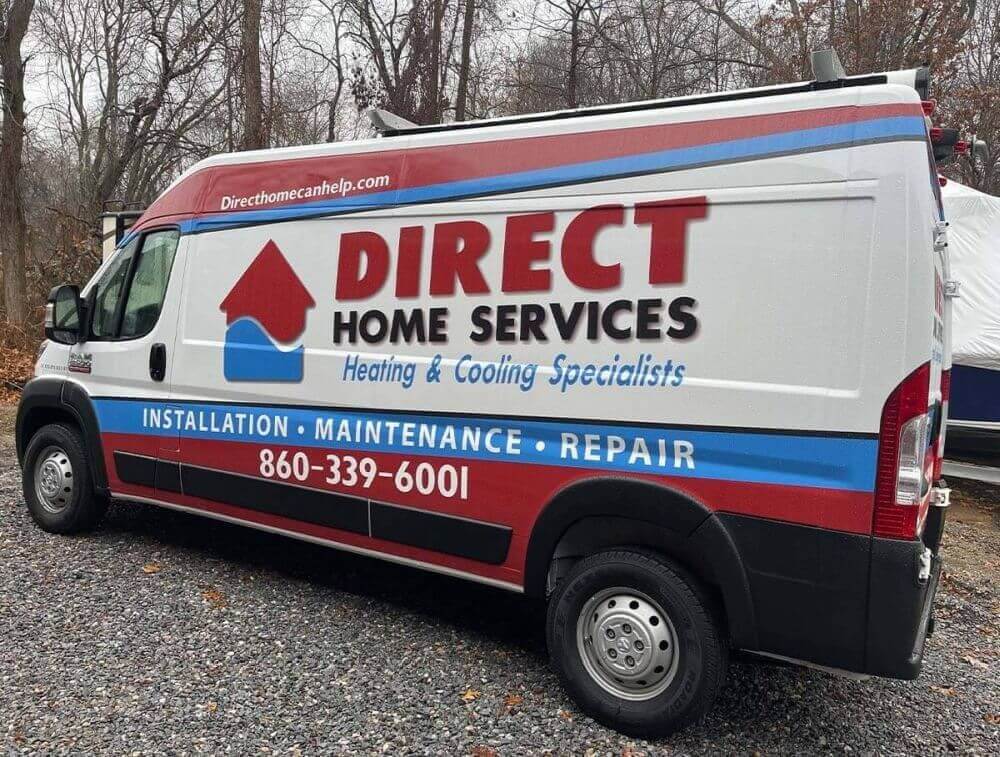
Property owners who want predictable cooling in Durham, Middletown, Middlefield, Killingworth, Haddam, Madison, Guilford, Wallingford, Cheshire, Meriden, Cromwell, Portland, East Hampton, Higganum, and Rockfall can book AC maintenance Durham CT with a contractor that proves its process in writing. Direct Home Services operates from 57 Ozick Dr Suite i in Durham 06422 with fast access to Route 17, Route 79, Route 68, and Route 147 for county-wide coverage. The team holds a Connecticut S-1 unlimited heating and cooling license and staffs Monday through Saturday with 24-hour operational readiness during peak season. Technicians are NATE certified and EPA 608 certified for refrigerant handling, including work on systems that use R-410A and newer A2L refrigerants such as R-454B and R-32. As an American Standard Customer Care Dealer, Direct Home Services services and maintains American Standard systems along with Trane, Carrier, Lennox, Bryant, Bosch, Rheem, Goodman, Mitsubishi Electric, and Daikin equipment common across the area.
An honest tune-up is not a sales pitch. It is a documented service visit with real measurements. Expect clear pricing in the $120 to $250 range for a standard single-system spring visit and $200 to $400 for a premium multi-point inspection. Expect a written report with superheat, subcooling, temperature split, amperages, capacitor microfarads, and drain status. Expect a straightforward quote if a weak part needs replacement now. For AC maintenance Durham CT, call +1 860-339-6001 or visit the AC maintenance page to schedule. Same-day and next-day spring appointments are typically available before the first heat wave. Free written quotes and annual maintenance plans in the $300 to $600 range help lock in priority scheduling for the cooling season. If a tune-up reveals that replacement planning makes sense, Direct Home Services provides free in-home estimates, transparent written quotes, and if a future heat pump installation is considered, guidance on Energize CT and Eversource rebates and federal Inflation Reduction Act credits that can reduce upgrade costs.
Direct Home Services provides professional HVAC repair, replacement, and emergency plumbing services in Durham, CT. Our local team serves residential and commercial clients across Middlesex, Hartford, New Haven, and Tolland counties with high-efficiency heating, cooling, and drainage solutions. We specialize in rapid furnace repair, air conditioning installation, and expert drain cleaning to ensure your home remains comfortable and functional year-round. As a trusted local contractor, we prioritize technical precision and transparent pricing on every service call. If you are looking for an HVAC contractor or plumber near me in Durham or the surrounding Connecticut communities, Direct Home Services is available 24/7 to assist. Direct Home Services
57 Ozick Dr Suite i Phone: (860) 339-6001 Website: https://directhomecanhelp.com/ Social Media:
Facebook |
Instagram
Map: Google Maps
Durham,
CT
06422,
USA